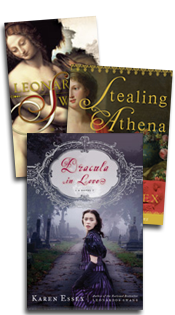
I have a controversial question for you today, one I’d love you to answer in the comments.
As I’m re-publishing Dracula In Love, I’ve been thinking about how far fiction has come. When I first released this book through Doubleday, readers were divided on how much sex was too much in literary fiction.
Now, we have readers on tiktok ranking the spice level of the books like it’s a badge of honor. The difference between books written just for spice and mine is that the eroticism in my novels is thematic and character driven, not there just for thrills. However, there is still a division in literary fiction.
This artice I wrote for Publisher’s Weekly says it best:
During an auction for the audio rights to my novel, Dracula in Love, my editor forwarded me an e-mail from one of the bidders. “This book is so hot that I can’t wait to get home to my wife!” he proclaimed, and then outbid everyone else and presumably went home and made his wife happy.
We were delighted to hear that because during the editing process, we had tortuous debates over just how much sex would be too much. I was warned that the basic American reader was puritanical; specifically, the literary reader, that elite creature who demands distinction from the (heaven forbid!) genre reader. They pointed out that the book had all the elements of a literary work: a strong, authoritative voice, painstakingly composed prose, and serious themes. “The book is too rich to have its seriousness dismissed because of the sex scenes. Readers see some sex on the page and assume it’s a bodice-ripper.” I didn’t believe this until readers (puritanical ones) chimed in.
Let me say that I set out to write something that was both literary and erotic, something that truly explored women’s sexual pleasure. One of my biggest motivations for reimagining Bram Stoker’s brilliant novel, Dracula, from the female perspective was to turn the original story inside out, exposing its underbelly, or its “subconscious mind.” A great part of what could not be expressed in the 1890s was women’s sexual pleasure. In fact, in my research, I discovered case after case in asylum archives of women being committed for having what we today consider normal sex drives.
Yet I have received huffy complaints from some readers that I cheapened both the book and its female protagonist by including sex scenes. Some expressed “shock” and others have been upset by “the author’s need to shock.”
Far from wanting to shock, I wanted to delight, to thrill, and to illuminate in ways that were impossible in the 1890s. I wanted to envelop the reader in the lush velvet of the Victorian era, with its contained and corseted sensuality. I also wanted to avoid the contemporary literary theme in which female characters explore sexual taboos, but are fraught with shame and self-loathing.
A reviewer declared that the sex in Dracula in Love, while erotic, was tasteful, because the writing was “artistic.” Precisely what that means, I do not know, but if “literary” implies either the absence of sex, or linking female pleasure with self-loathing, I’ll take “artistic” any day.
So here is the question I would like you, dear readers, to answer in the comments. (And please answer in the comments so we can have a real dialogue. I can’t reply to each individual email response).
How much sex is too much? In fiction, that is.
In real life, may I quote the late Jacqueline Susann: “Once is Not Enough.” 😊
Ever yours,
Karen